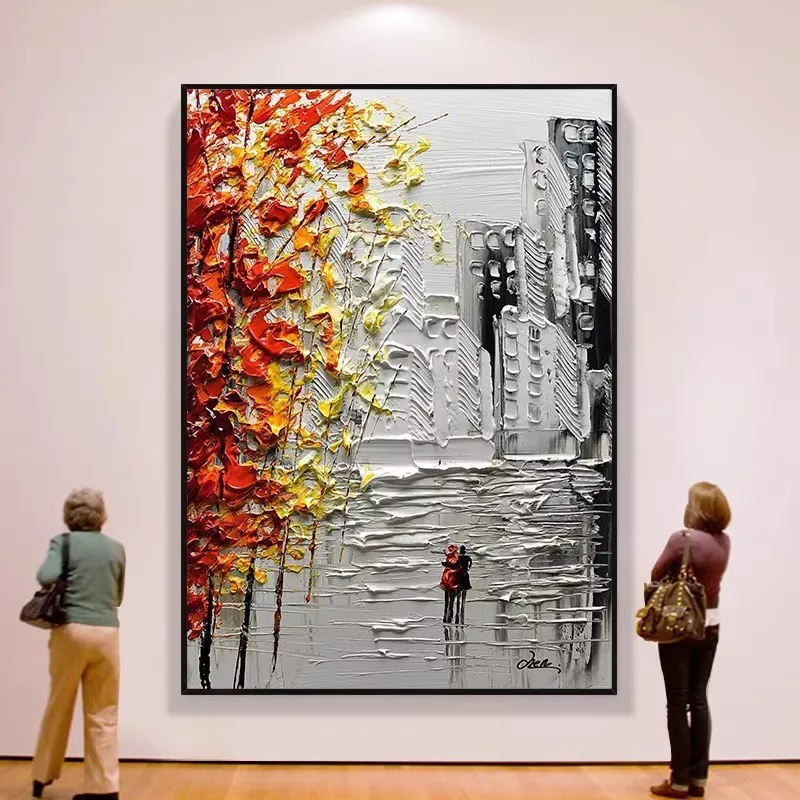
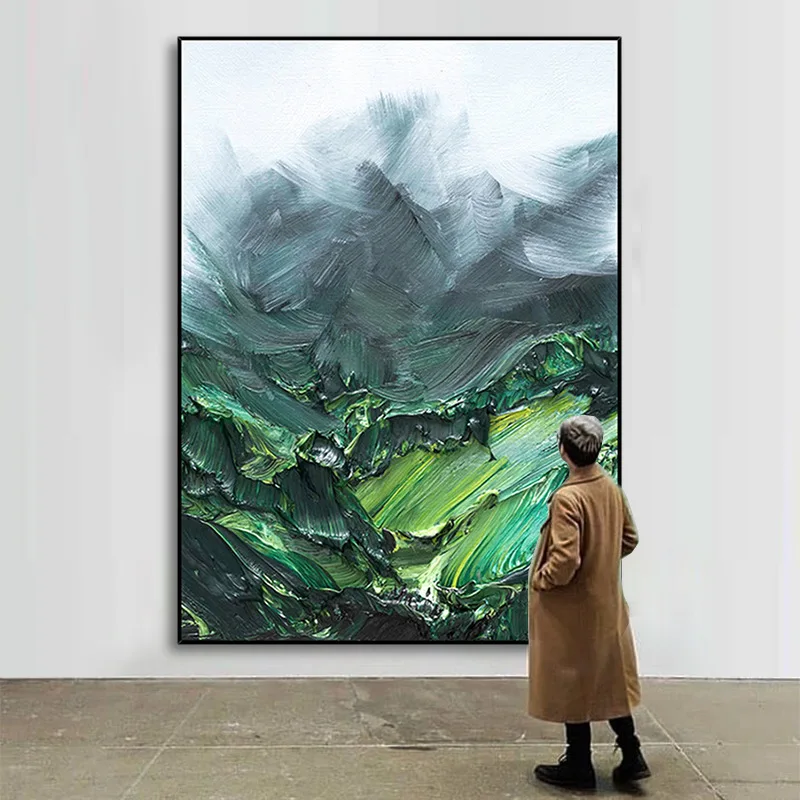
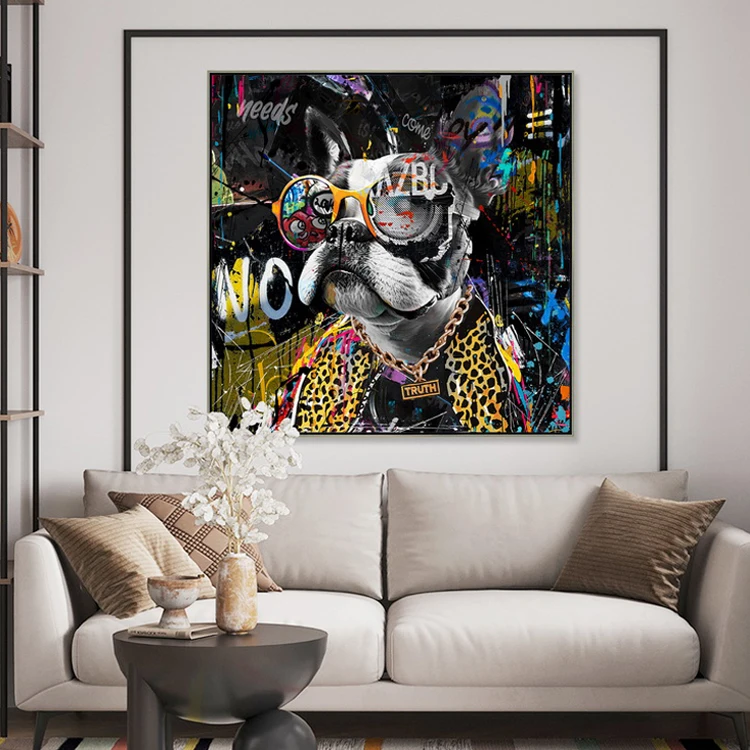
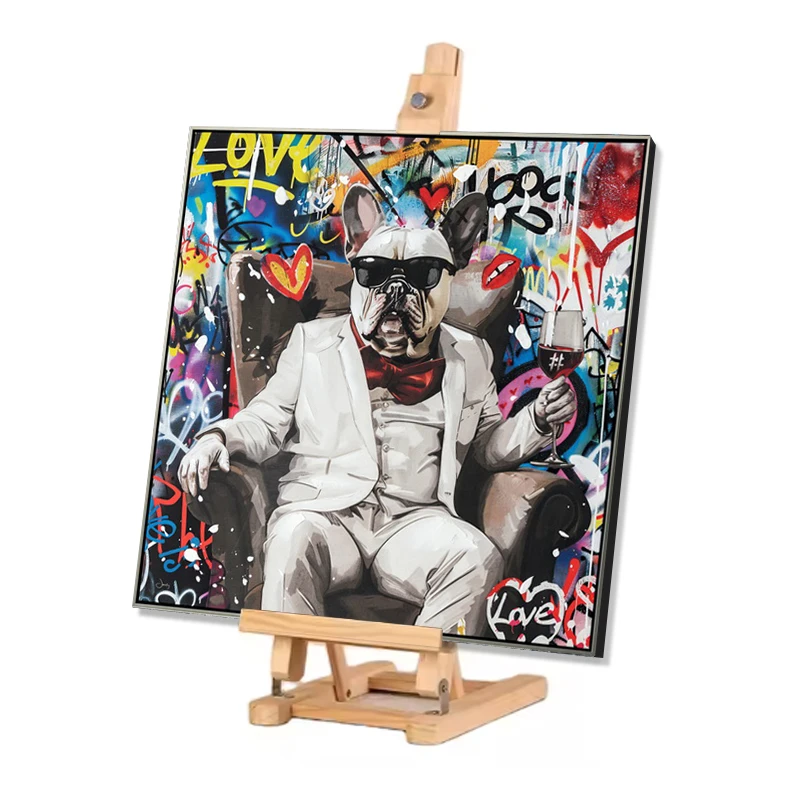
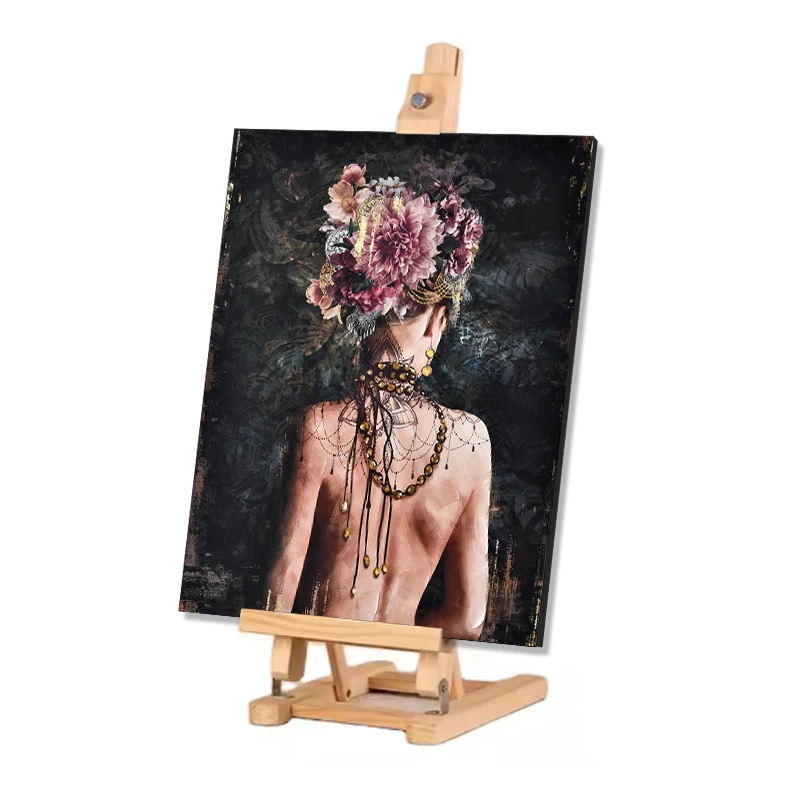
For businesses sourcing wholesale wall art, oil paintings, or custom commercial artwork
Selecting a reliable art supplier sounds straightforward—until you are actually responsible for procurement. Pricing alone cannot determine a long-term partner, and beautifully staged product photos often tell only part of the truth. What truly separates a dependable oil painting supplier or wall art manufacturer from an average one is a constellation of practices: quality control, material standards, workflow transparency, and consistency across scale.
Below is a refined, field-tested checklist designed for professional buyers, interior contractors, hotel groups, commercial decorators, and B2B procurement managers who need artwork that performs well in real spaces—not just on a brochure.
The first filter for evaluating supplier quality is always material integrity. Even if two artworks look similar online, the underlying materials may differ dramatically.
What to examine:
Canvas type: cotton, linen, poly-cotton blends; thread count; warp/weft stability.
Primer quality: whether the gesso coating is even, smooth, and properly cured.
Paint formulation: pigment load, binder purity, resistance to yellowing; oil vs. acrylic for different applications.
Print technology (for canvas prints): giclée vs. standard inkjet; color gamut; fade resistance ratings.
A practical insight from working with commercial buyers: a supplier willing to explain why they choose a specific canvas weave or pigment brand often has stronger internal standards. Those who rush through this question usually don’t.
One excellent sample does not guarantee stable output. True art supplier quality appears when you compare five, ten, or fifty pieces from the same order.
Indicators of consistent craftsmanship:
Uniform brushwork texture or digital print saturation
Identical color temperature across multiples
Aligned stretching tension on each canvas frame
Absence of warping or loose edges
Commercial interiors—especially hotels and corporate offices—need entire collections to feel cohesive. This is exactly where low-quality suppliers fail.
You should see evidence that the supplier’s QC is structured, not improvisational.
Ask for details such as:
Their inspection stages: raw materials → mid-production → finishing → packing
Whether they provide defect reports
How they handle rejected items
Whether they photograph batch samples before shipping
Factories that can produce QC documentation tend to be more systematic. It’s also a strong sign they handle larger wholesale orders without chaos.
Color is one of the biggest pain points in wall art sourcing. Lighting, monitors, and pigments introduce variations that can disrupt your project’s design concept.
Better suppliers will:
Provide color-calibrated previews
Maintain monitor ICC standards
Offer test prints or small samples
Explain their pigment/palette stabilization workflow
From personal experience evaluating multiple art factories: suppliers who invest in color management usually perform better in every other category as well.
Many companies focus on the artwork itself but underestimate the engineering around it.
Look closely at:
Wood frame moisture level (below 12% is ideal to avoid warping)
Joinery strength and alignment
Stapling pattern and canvas tension
Optional upgrades such as gallery wrap, floating frame, or aluminum frame
Good structural work rarely attracts attention—but poor structural work always becomes a complaint.
Breaking during transport is one of the most preventable forms of waste in the wholesale wall art industry.
Suppliers with mature logistics will use:
Corner protectors + foam wrap + double-wall cartons
Moisture-resistant inner layers
Drop-test-validated packaging
Individual vs. bulk-pack options depending on order type
A supplier’s packaging often reveals how seriously they treat the customer’s brand.
For corporate and hospitality procurement, compliance is not optional.
Common documents include:
MSDS / material safety sheets
FSC certificates for wood frames
Lead- and VOC-free confirmations
Fire resistance ratings for commercial spaces
A professional oil painting supplier or canvas art factory should provide these without hesitation.
Even excellent production means little if a supplier cannot communicate clearly or resolve issues professionally.
Reliable suppliers:
Answer technical questions directly
Provide realistic timelines, not flattering ones
Offer clear remedies for defects or shipping damage
Maintain traceability for each order
Sometimes the way a supplier answers one difficult question tells you more than ten perfect samples.
If a visit is not possible, the next best thing is transparency via video.
You should expect to see:
Production lines
Material storage environments
QC stations
Framing and stretching sections
Packing processes
Factories that avoid showing their workshop usually have a reason.
This is your final validation step. A small but diverse pilot order can reveal:
Real-world lead time
Quality stability
Responsiveness
Packaging durability
Consistency across reproductions
A supplier who handles pilot orders seriously is more likely to remain reliable for long-term wholesale partnerships.
After years of observing procurement patterns in the art industry, one conclusion keeps resurfacing:
Supplier quality is rarely determined by a single factor—it’s the sum of small, disciplined practices repeated over time.
This checklist is not just about evaluating artwork; it’s about assessing the culture of the supplier behind it. Businesses that adopt a structured evaluation approach consistently secure better long-term partners, fewer production surprises, and far higher customer satisfaction across their projects.
 Hot News
2025-10-20
2025-09-08
2025-09-01
2025-02-01

Discover Free Cloud Arts, where art is more than just visuals—it's an emotional journey. Our innovative designs and unique concepts bring something different to the world of art. Explore our collections of 100% handmade paintings, canvas prints, and layered mat glass art.
No. 2980, Zhufeng Road South, Doumen District, Zhuhai, Guangdong, China, 519170
Copyright © 2026 China Zhuhai Free Cloud Arts Co., Ltd. All rights reserved. Privacy Policy;
 EN
EN