An expert material study for hotels, offices, and large-scale commercial projects
When companies plan the visual identity of a commercial interior—be it a hotel lobby, a wellness center, or a corporate meeting space—the question of which medium to use often appears much later than it should. Yet the choice between oil paints and acrylics quietly determines how a space feels, how it ages, and sometimes even how clients perceive the brand.
This article takes a closer, more academically oriented look at both materials. Not simply a “pros and cons” list, but a deeper examination of how these mediums behave over time, why designers prefer one over the other in specific contexts, and how their physical properties interact with lighting, humidity, and foot traffic in commercial environments.
Oil painting has a centuries-long lineage. Its slow-curing structure allows pigments to form an almost sculptural surface. Acrylic, in contrast, emerged from 20th-century polymer chemistry—faster, lighter, and far more resilient to environmental change.
In residential spaces, the distinction may be more aesthetic. In commercial interiors, however, the medium influences:
maintenance frequency,
color longevity,
brand-specific ambiance,
and even budget cycles for art procurement.
As one designer I once interviewed said:
“In hotels, art behaves like architecture—once installed, it must ‘perform’ for years.”
That idea has stayed with me and often reappears when evaluating which medium is more commercially appropriate.
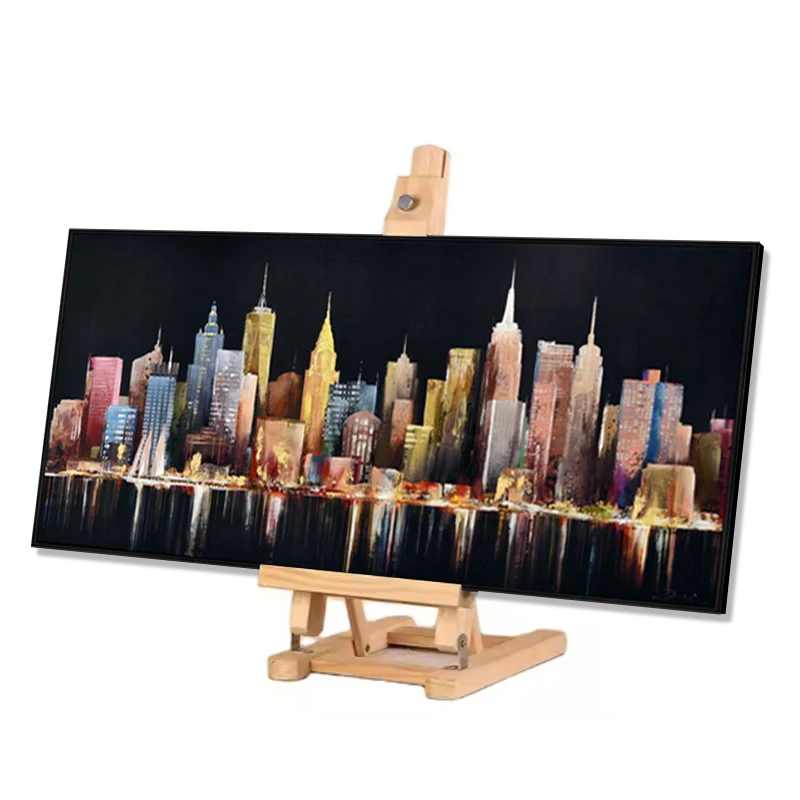
Oil paints have a unique visual gravity. Their pigments suspend in oil, allowing for slow blending and the formation of rich color fields. Commercial interiors that rely on warmth, luxury, or narrative charm often gravitate toward oil paintings for this reason.
Unmatched texture: Oil layers create a tactile, almost atmospheric presence. This “visual tactility” is highly desirable in boutique hotels and upscale dining spaces.
Color depth: Oils maintain chromatic richness even under soft or indirect lighting—conditions typical in hospitality design.
Long cultural association with fine art: Oil paintings subtly signal quality and permanence, which reinforces premium positioning.
However, the medium is not without complications:
Longer production time (drying layers can take days or weeks)
Slightly higher maintenance sensitivity in humid environments
Weight and handling requirements for large pieces
For luxury hotels or institutions aiming for “collection-like” aesthetics, these inconveniences are usually acceptable, sometimes even expected. For fast-paced commercial rollouts, they may slow the timeline.
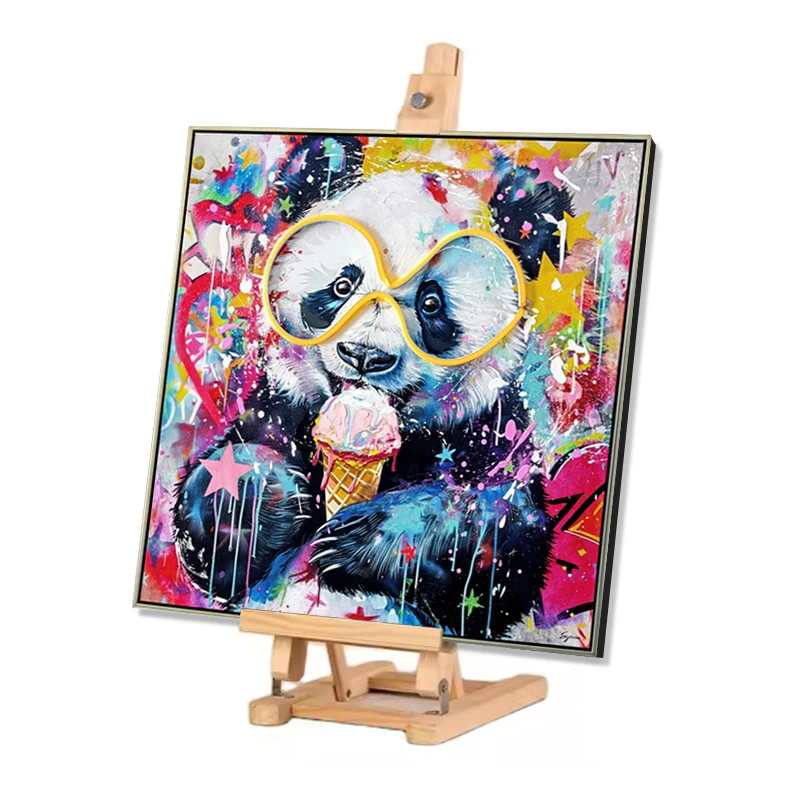
If oil paint embodies tradition, acrylic represents adaptability. Made from pigment mixed with synthetic polymers, acrylics dry rapidly—sometimes within minutes—forming a flexible, durable film.
Speed: Rapid drying accelerates production, an advantage when furnishing multiple hotel rooms or offices simultaneously.
Durability: Acrylic is more resistant to UV exposure, temperature swings, and mechanical stress—ideal for lobbies, corridors, airports, and retail.
Stylistic versatility: Acrylic supports everything from fine realism to bold contemporary abstraction.
Acrylic paintings typically:
require less maintenance,
have stronger colorfastness under commercial LED lighting,
and withstand frequent cleaning or touching (common in public areas).
Some designers even prefer the slightly “cleaner,” flatter look of acrylic surfaces for minimalist corporate spaces.
A material choice is never neutral. Oil and acrylic interact differently with ambient light and spatial psychology.
Oil surfaces scatter light softly, creating depth. Warm color palettes appear even more saturated. In commercial settings, this often results in:
a luxurious, intimate ambiance,
heightened visual warmth,
a sense of handcrafted authenticity.
This is why oils frequently appear in:
✔ boutique hotels
✔ fine-dining restaurants
✔ heritage-inspired interiors
✔ luxury residential sales centers
Acrylic finishes reflect light more uniformly. Colors feel crisp and modern—even under cooler LED lighting. Acrylic pieces contribute to:
a cleaner, more structured spatial rhythm,
energetic or contemporary moods,
sharper graphic impressions.
Thus, acrylics dominate in:
✔ modern offices
✔ airport lounges
✔ co-working environments
✔ retail environments
The initial cost difference is well known: acrylic paintings are typically more economical. But for businesses, the “value horizon” is far more complex.
Oil paintings may cost more upfront, yet often:
retain perceived value longer,
boost guest satisfaction scores (especially in high-end hotels),
become part of a long-term décor narrative.
Acrylic paintings, meanwhile:
allow for larger quantities at scale,
reduce replacement cycles,
accommodate frequent interior refreshes without straining budgets.
From a procurement perspective, the choice becomes a balance between brand longevity and operational flexibility.
Across dozens of commercial art projects, I’ve seen a consistent pattern:
Hotels aiming to enhance storytelling lean toward oil.
Businesses needing durability and consistency choose acrylic.
Mixed-media environments—especially large chains—often combine both as part of a broader design strategy.
Interior designers increasingly treat artwork as a semi-architectural component. Not decoration, but an extension of the space’s emotional identity. And medium is one of the earliest—and smartest—decisions they can make.
There is no universal answer. Instead, the correct conclusion may look like this:
Choose oil paintings
when the goal is luxury, timelessness, or atmospheric depth.
Choose acrylic paintings
when durability, scalability, and clean contemporary aesthetics matter more.
Use a hybrid approach
when your project spans spaces with different emotional or operational requirements.
Understanding the strengths of each medium helps businesses—not just designers—make decisions that reflect both creative vision and long-term practicality. And that’s the essence of effective commercial interior curation.
 Hot News
2025-10-20
2025-09-08
2025-09-01
2025-02-01

Discover Free Cloud Arts, where art is more than just visuals—it's an emotional journey. Our innovative designs and unique concepts bring something different to the world of art. Explore our collections of 100% handmade paintings, canvas prints, and layered mat glass art.
No. 2980, Zhufeng Road South, Doumen District, Zhuhai, Guangdong, China, 519170
Copyright © 2026 China Zhuhai Free Cloud Arts Co., Ltd. All rights reserved. Privacy Policy;
 EN
EN