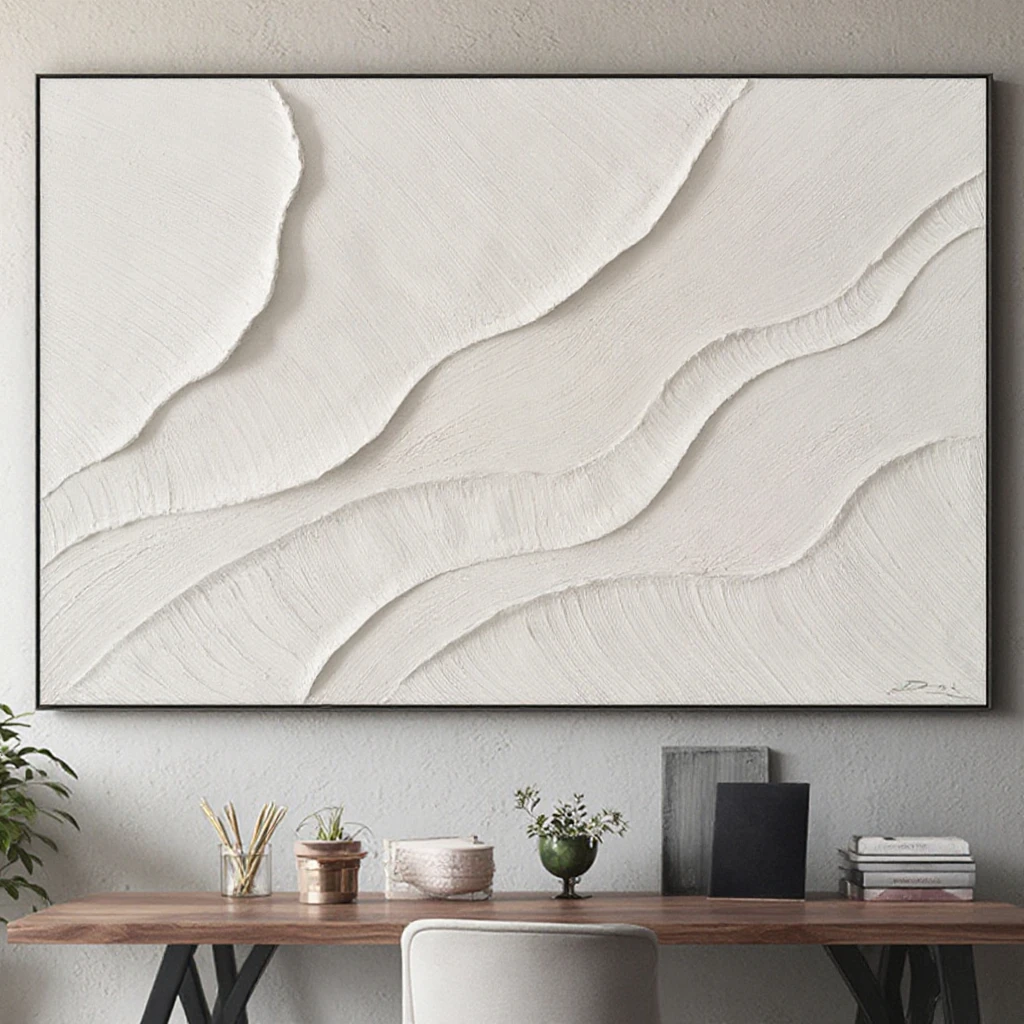
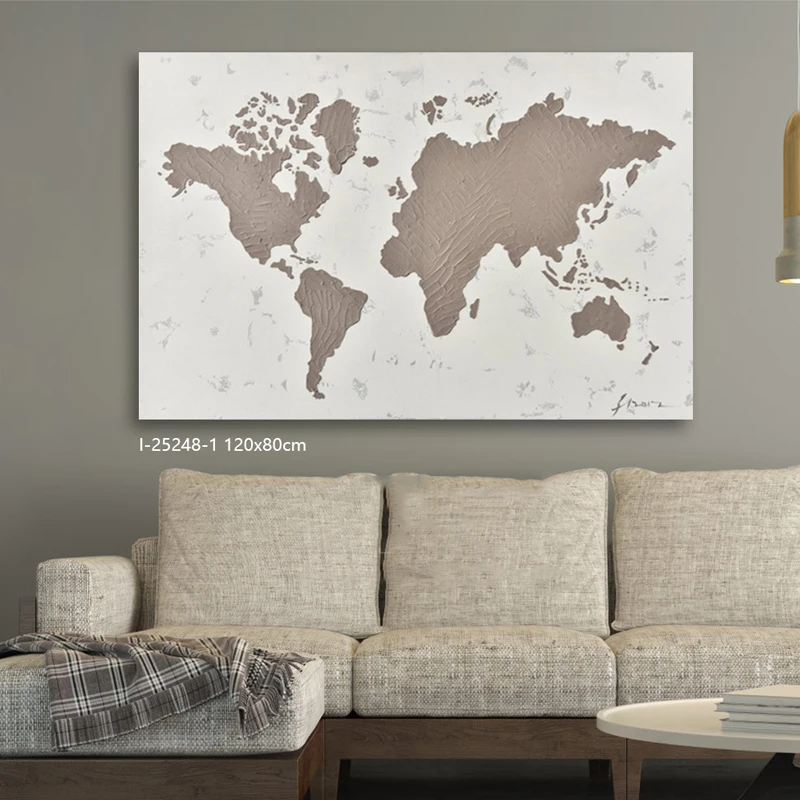
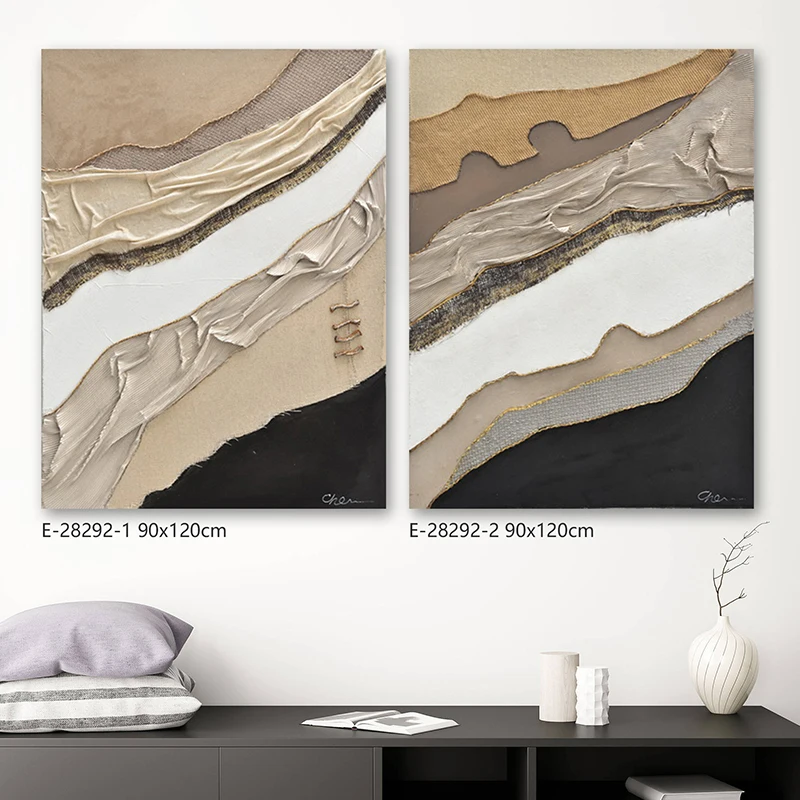
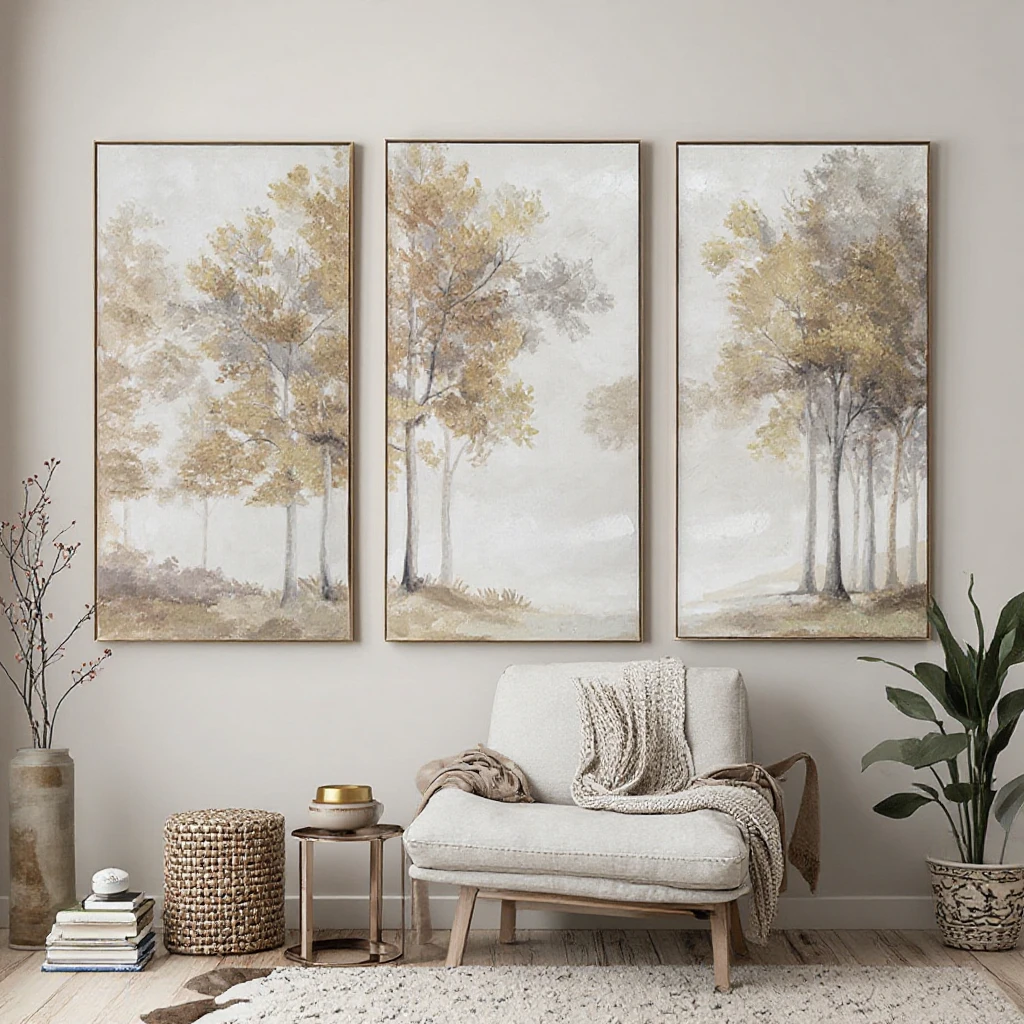
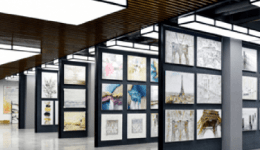
For B2B buyers, choosing between custom oil paintings and ready-made oil paintings is rarely a purely aesthetic decision. It’s a question of control, consistency, timing, and long-term value. While both options can work in commercial environments, they serve very different procurement strategies.
Over time, I’ve noticed that the most successful projects aren’t the ones that chase either extreme. They’re the ones that understand when customization adds value—and when it quietly creates unnecessary complexity.
At a glance, the distinction seems obvious. Custom oil paintings are created specifically for a project; ready-made pieces are selected from existing collections. In practice, however, the difference runs deeper.
Custom artwork influences production workflow, lead time, pricing models, and risk management. Ready-made art shifts the focus toward availability, speed, and predictable cost. Neither is inherently better. Their effectiveness depends entirely on context.
Custom artwork offers a level of alignment that off-the-shelf pieces rarely achieve.
For hotels, corporate headquarters, and flagship spaces, custom oil paintings can reflect brand colors, narratives, or conceptual themes with precision. This alignment often strengthens brand recall without relying on logos or explicit messaging.
In large commercial projects, consistency matters more than uniqueness. Custom collections allow procurement teams to lock in color palettes, proportions, and stylistic logic across dozens or hundreds of pieces.
Custom paintings can be designed around exact wall dimensions, sightlines, and lighting conditions. This avoids compromises that often occur when existing artworks are forced into unsuitable spaces.
From a lifecycle perspective, custom oil paintings often age better. They are designed for the space, not retrofitted to it, which reduces the likelihood of early replacement.
Customization introduces complexity.
Lead times are longer, particularly for fully hand-painted oil works that require proper drying and finishing. Costs may increase, especially for small orders. There is also a higher need for communication and approvals—something procurement teams must factor into project timelines.
Custom is powerful, but it demands planning discipline.
Ready-made oil paintings are often underestimated in B2B procurement, yet they solve very real problems.
For projects under tight deadlines—property staging, fast renovations, temporary installations—ready-made works offer immediate solutions. Lead times are predictable, and selection is straightforward.
Because production costs are already absorbed, ready-made artwork typically offers lower unit prices. This is particularly attractive for secondary spaces or budget-sensitive projects.
There is less need for approvals, fewer variables in production, and minimal exposure to delays. For procurement teams managing multiple vendors, this simplicity can be valuable.
Off-the-shelf art can struggle in environments that require strong brand differentiation. Limited size options, color mismatches, or inconsistent series availability may lead to visual fragmentation—especially across large properties.
Once a design is discontinued, replacing damaged pieces can also become difficult.
| Factor | Custom Oil Paintings | Ready-Made Oil Paintings |
|---|---|---|
| Brand alignment | High | Moderate |
| Lead time | Longer | Short |
| MOQ flexibility | Medium–High | High |
| Cost efficiency | Strong at scale | Strong at low volume |
| Visual consistency | Excellent | Variable |
| Risk level | Moderate | Low |
Many experienced B2B buyers adopt a hybrid approach.
Custom oil paintings anchor key spaces—lobbies, executive floors, flagship suites—while ready-made pieces fill corridors, staff areas, or secondary rooms. This strategy balances visual identity with operational efficiency.
From a procurement standpoint, this hybrid model often delivers the best return on investment.
The choice between custom and ready-made artwork is also shaped by supplier capability. Some suppliers excel in customization but struggle with volume. Others offer large catalogs but limited flexibility.
A reliable oil painting supplier should be able to:
Advise on the most suitable option per space
Offer scalable customization without sacrificing quality
Maintain consistent materials across both product types
Supplier guidance, when informed and honest, can significantly reduce procurement risk.
The real question is not whether custom or ready-made oil paintings are better. It’s whether the artwork strategy aligns with the project’s scale, timeline, and brand priorities.
In commercial environments, art succeeds when it supports the space quietly and consistently. B2B buyers who evaluate artwork through this lens tend to make decisions that hold up long after installation day.
 Hot News
2025-10-20
2025-09-08
2025-09-01
2025-02-01

Discover Free Cloud Arts, where art is more than just visuals—it's an emotional journey. Our innovative designs and unique concepts bring something different to the world of art. Explore our collections of 100% handmade paintings, canvas prints, and layered mat glass art.
No. 2980, Zhufeng Road South, Doumen District, Zhuhai, Guangdong, China, 519170
Copyright © 2026 China Zhuhai Free Cloud Arts Co., Ltd. All rights reserved. Privacy Policy;
 EN
EN