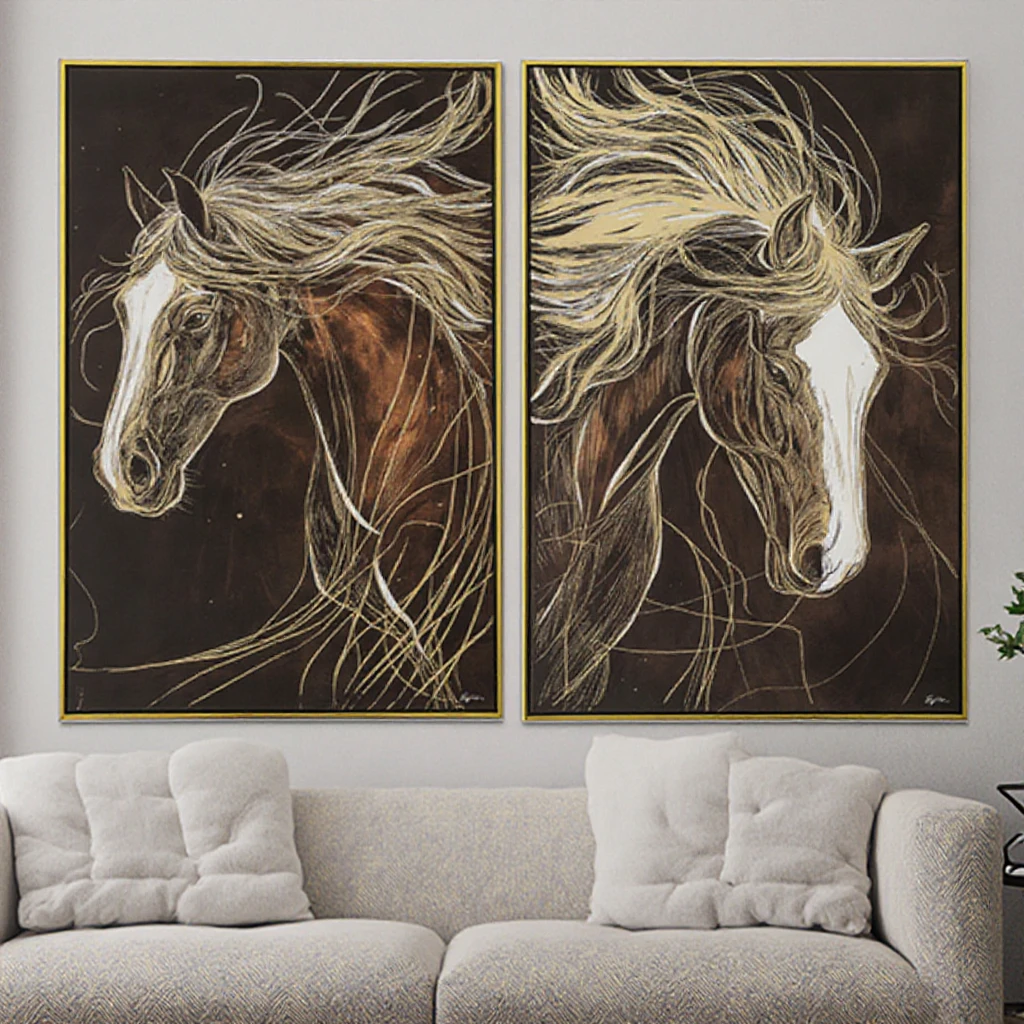
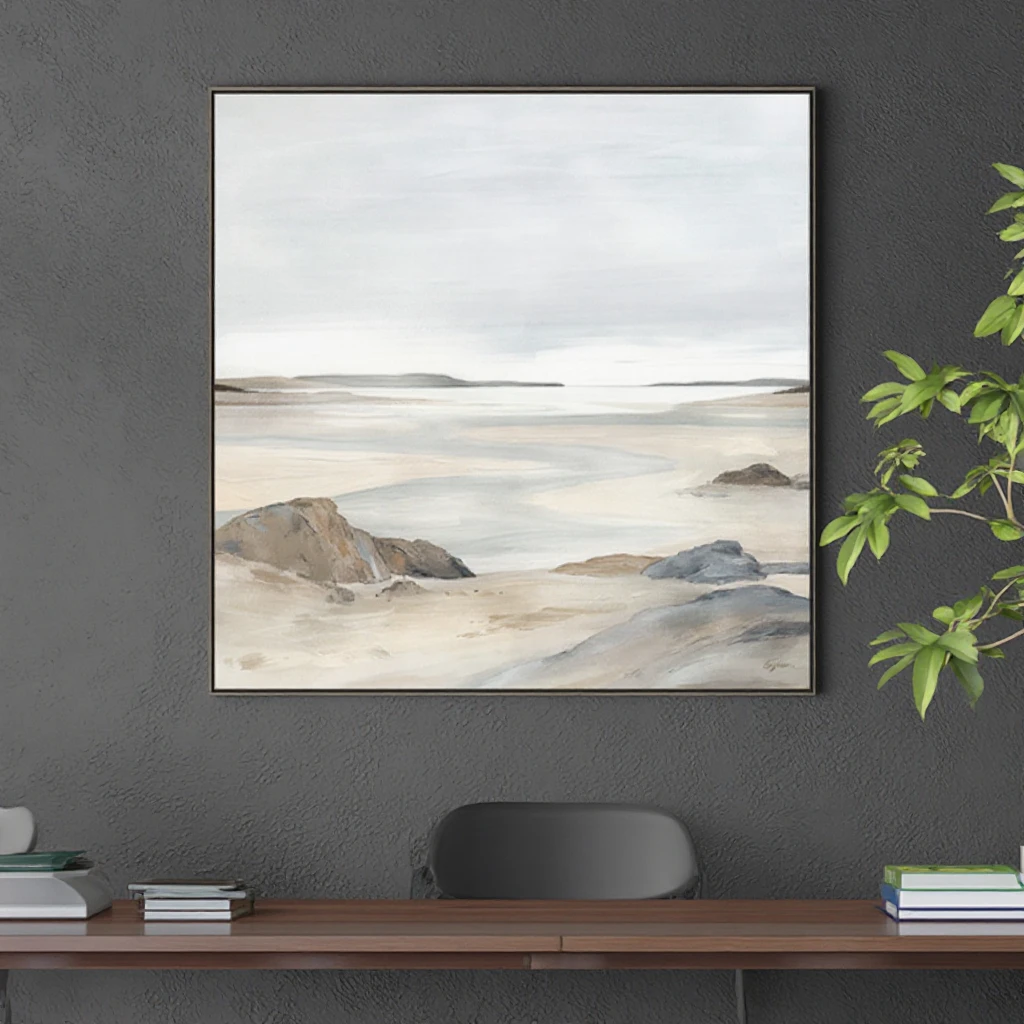
When discussing oil painting quality, many buyers hear phrases such as "museum quality," "gallery grade," or "museum standard craftsmanship." These terms sound impressive, but they often create confusion during commercial procurement.
The reality is that museum standards and commercial standards are not the same thing—and they are not intended to be.
A painting created for a museum collection serves a very different purpose from artwork commissioned for a luxury hotel, corporate headquarters, healthcare facility, or large hospitality project.
Understanding the distinction helps buyers make smarter decisions, avoid unnecessary costs, and choose artwork that performs effectively within its intended environment.
Museum standards focus primarily on long-term preservation.
When museums acquire artwork, they are often thinking in decades—or even centuries.
The goal is not simply visual appeal. The goal is ensuring that the artwork can survive for future generations with minimal degradation.
Museum-quality works are typically evaluated based on:
In many cases, museums prioritize preservation above practicality.
A museum painting may spend most of its life under carefully controlled conditions:
Commercial environments rarely operate this way.
Commercial standards focus on performance in real-world environments.
Hotels, offices, restaurants, resorts, healthcare facilities, and residential developments require artwork that can withstand daily use while maintaining visual quality and brand consistency.
Commercial-grade oil paintings are usually evaluated according to:
The objective is not to preserve artwork for 200 years.
The objective is to deliver excellent visual performance throughout the expected lifecycle of the interior.
One common misconception is that museum standards are automatically "better."
In practice, they are simply designed for a different purpose.
Consider two examples:
A painting may be displayed under highly controlled lighting conditions and rarely moved.
Conservation concerns dominate decision-making.
A painting must tolerate:
The requirements are fundamentally different.
The best solution is not always the most archival solution.
It is the most appropriate solution.
Museum collections often prioritize materials with proven archival histories.
Examples include:
Commercial projects, however, often balance preservation with operational realities.
Many hospitality projects successfully use:
These materials may not be selected for 300-year longevity, but they often provide excellent durability within commercial interiors.
Both museum and commercial projects value color stability, but the expectations differ.
Museums may evaluate color performance over multiple generations.
Commercial buyers typically focus on:
For example, a hotel artwork program may be expected to maintain visual quality for 10–15 years before a major interior refresh.
That requirement differs significantly from museum conservation planning.
Museums often acquire individual artworks.
Commercial buyers rarely do.
A hospitality project may require:
In these situations, consistency becomes a critical quality benchmark.
Questions buyers should ask include:
These concerns are generally more important in commercial procurement than museum-level archival specifications.
Museum artworks receive specialized care.
Commercial interiors do not.
Housekeeping teams, facility managers, and maintenance staff often interact with artwork regularly.
As a result, commercial oil paintings should prioritize:
An artwork that requires museum-level maintenance may not be practical in a busy hotel environment.
Museum standards often involve premium materials, extensive documentation, and specialized conservation procedures.
These investments make sense when preserving historically significant works.
Commercial buyers, however, typically evaluate value differently.
Key considerations include:
The most effective procurement strategy is usually finding the optimal balance between quality, durability, and operational efficiency.
Instead of asking whether artwork is "museum quality," consider asking:
These questions often reveal more useful information than marketing terminology.
In large hospitality projects, the most successful artwork programs are rarely those that pursue museum standards at all costs.
Instead, they focus on creating the right balance between:
A beautifully preserved artwork has limited value if it cannot function effectively within the realities of a commercial environment.
The best commercial art programs recognize that performance and longevity must work together.
Museum standards and commercial standards are not competing concepts. They simply serve different objectives.
Museums prioritize preservation for future generations. Commercial projects prioritize reliable performance within active, real-world spaces.
For hospitality buyers, designers, and procurement teams, the smartest approach is not asking whether an artwork meets museum standards.
It is asking whether the artwork meets the demands of the environment where it will actually be used.
When materials, production methods, and installation strategies align with those demands, artwork becomes more than decoration—it becomes a durable part of the guest experience and the brand story.
 Hot News
2025-10-20
2025-09-08
2025-09-01
2025-02-01

Discover Free Cloud Arts, where art is more than just visuals—it's an emotional journey. Our innovative designs and unique concepts bring something different to the world of art. Explore our collections of 100% handmade paintings, canvas prints, and layered mat glass art.
No. 2980, Zhufeng Road South, Doumen District, Zhuhai, Guangdong, China, 519170
Copyright © 2026 China Zhuhai Free Cloud Arts Co., Ltd. All rights reserved. Privacy Policy;
 EN
EN