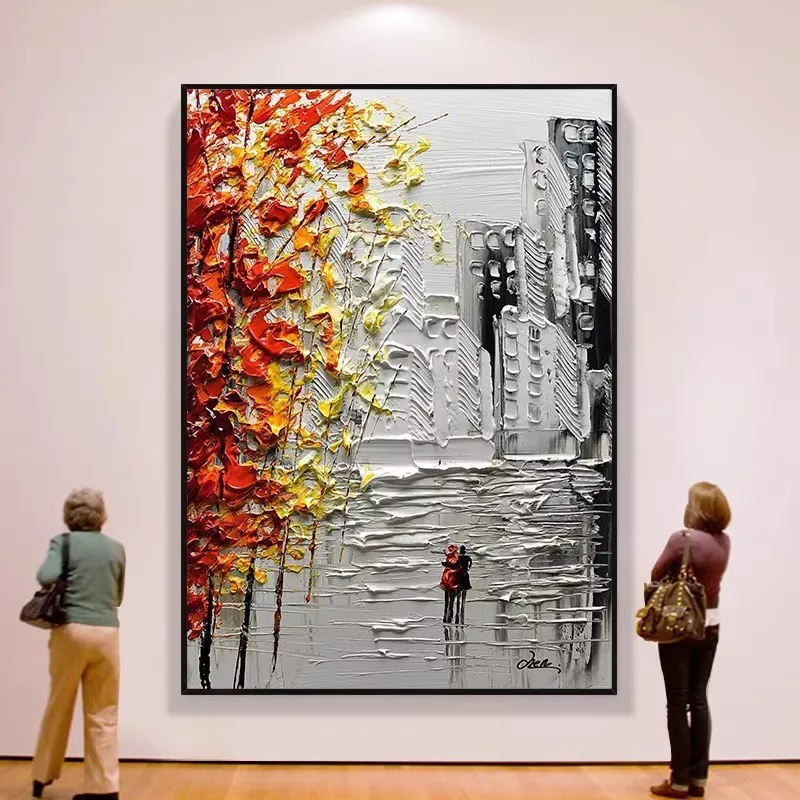
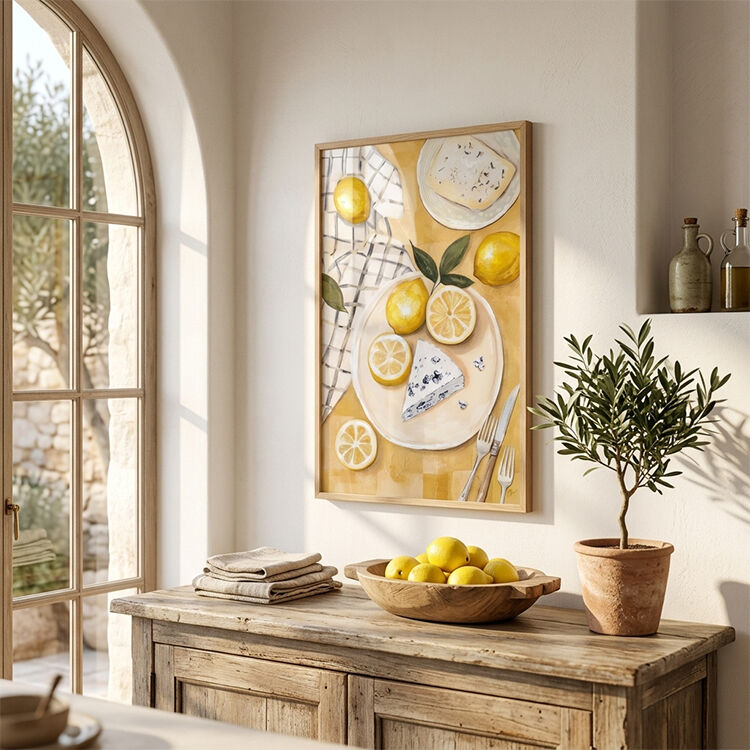
When a project requires oversized wall art — hotel lobbies, office atriums, luxury residences, healthcare corridors — the canvas material matters as much as the artwork itself. The wrong canvas can warp, crack, or fade. The right one holds color beautifully, stays stable under tension, and looks refined even after years of display.
In large-scale installations, the choice isn’t only aesthetic. It is a technical decision tied to durability, cost, transport, installation, and long-term maintenance.
Below is a practical guide comparing the most common canvas types used for commercial projects — along with clear pros and cons from a procurement perspective.
Cotton is often the default option for many art suppliers. It’s soft, easier to stretch, and usually more affordable than linen or synthetic alternatives. For medium- to large-format artworks, cotton performs reliably — as long as humidity is controlled.
Pros
cost-effective for bulk orders
smooth surface suitable for detailed work
easier to stretch over large frames
widely available worldwide
good choice for commercial interiors with stable climate control
Cons
expands and contracts in humidity
slightly less durable over decades
can sag on extra-large pieces if not reinforced
may require re-stretching in high-traffic environments
Best for: hotels, offices, retail interiors, corporate collections — especially when budgets must scale across multiple locations.
Linen has long been favored by professional painters. It is stronger than cotton and resists warping, which is invaluable for oversized artworks.
The subtle natural texture often enhances luxury interiors — making linen popular in premium hospitality and high-end residential projects.
Pros
exceptional strength for large formats
minimal stretch and deformation over time
refined surface texture associated with fine art
excellent paint adhesion and longevity
Cons
significantly more expensive
heavier, increasing framing and shipping costs
requires skilled stretching (especially at monumental scale)
Best for: luxury hotels, galleries, executive spaces, and long-term investment collections where stability and visual richness outweigh cost concerns.
Synthetic canvases are engineered to resist moisture and temperature shifts. They’re especially popular for digitally printed art and hybrid techniques used in large hospitality roll-outs.
For massive installations shipped globally, polyester can reduce risk.
Pros
excellent dimensional stability (minimal shrinking/expanding)
lighter weight for easier logistics
very consistent surface quality
compatible with high-resolution printing
Cons
less “handmade” texture compared to natural fabrics
not always favored for traditional oil painting
may look slightly more commercial if not carefully finished
Best for: large commercial print projects, multi-property artwork programs, environments exposed to temperature fluctuation (airports, modern lobbies, transport hubs).
Blended fabrics combine cotton’s feel with polyester’s stability. Many project managers choose this option for large wall art that must balance cost, durability, and appearance.
Pros
more stable than pure cotton
more affordable than pure linen
good paint adhesion
suitable for both hand-painted and printed artworks
Cons
quality varies depending on supplier
still expands slightly under humidity
lacks the full premium presence of linen
Best for: hotels, student housing, residential developments, and chain retail interiors that require consistent results across multiple sites.
For oversized art beyond standard frames — panoramic lobby murals, feature walls, long corridor runs — heavy-duty rolled canvas allows installation in sections.
Pros
easier to transport than pre-stretched large frames
supports truly monumental artwork
flexible installation options
can be mounted directly to walls or panels
Cons
requires skilled installation team
more planning needed around seams and alignment
repairs can be complex once installed
Best for: large hospitality renovations, public spaces, branded feature walls, art programs requiring dramatic visual impact.
When evaluating canvas types, consider:
Scale — how large will the artwork be?
Climate — does the environment have stable humidity and temperature?
Intended lifespan — temporary décor or long-term collection piece?
Installation logistics — freight limitations, elevator sizes, wall access?
Brand positioning — luxury narrative or contemporary commercial tone?
Budget and repeatability — single location vs. multi-site roll-out?
Often, procurement teams benefit from testing samples before final approval — especially for high-visibility areas.
Canvas isn’t just a surface. In large-scale art projects, it shapes the way guests perceive craftsmanship, brand quality, and design coherence. Making the right decision early prevents warping, fading, and costly replacements later.
For most B2B projects, the smart approach is not choosing the most expensive option — it’s choosing the canvas that best fits the environment, usage, and narrative goals of the space.
 Hot News
2025-10-20
2025-09-08
2025-09-01
2025-02-01

Discover Free Cloud Arts, where art is more than just visuals—it's an emotional journey. Our innovative designs and unique concepts bring something different to the world of art. Explore our collections of 100% handmade paintings, canvas prints, and layered mat glass art.
No. 2980, Zhufeng Road South, Doumen District, Zhuhai, Guangdong, China, 519170
Copyright © 2026 China Zhuhai Free Cloud Arts Co., Ltd. All rights reserved. Privacy Policy;
 EN
EN